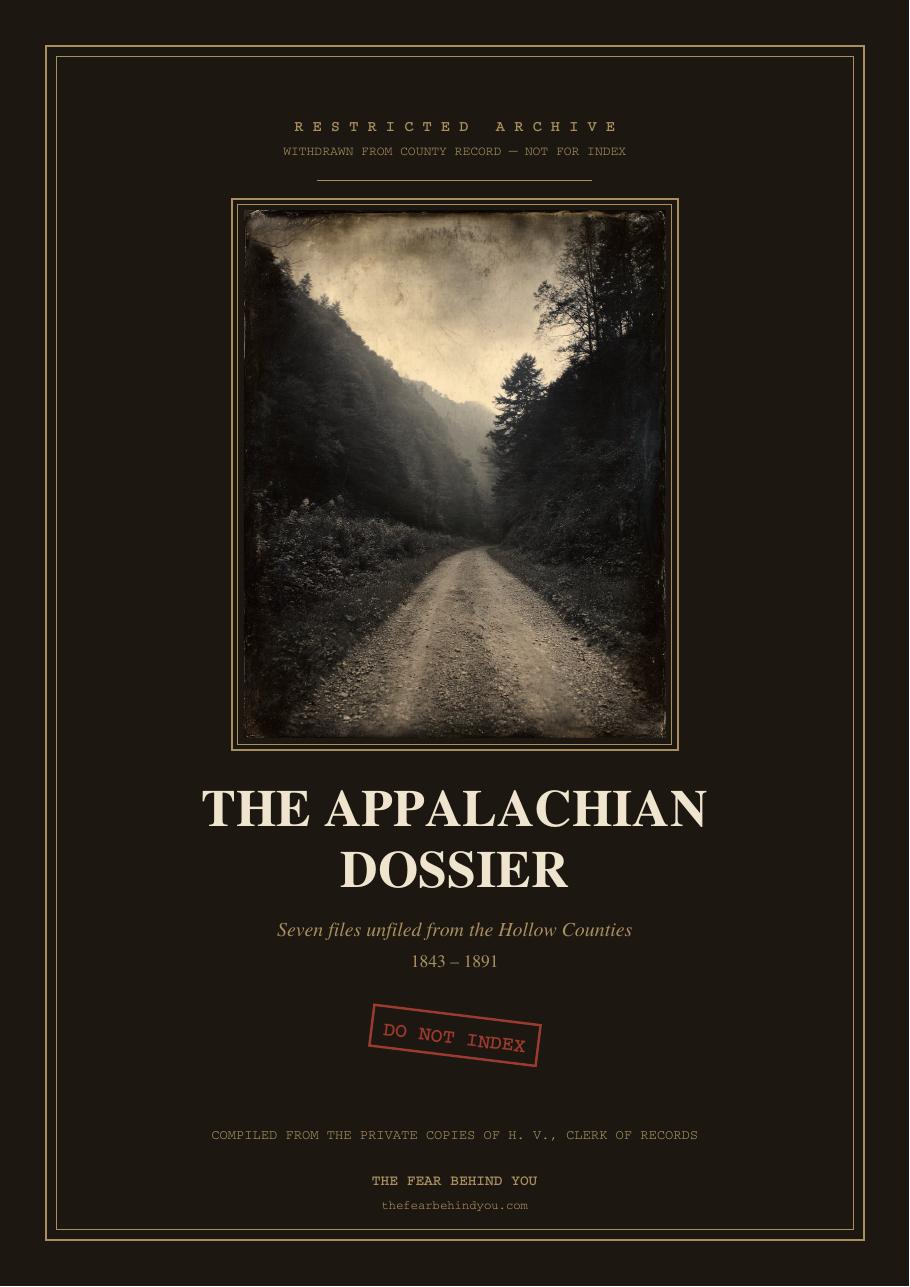
Between 1843 and 1891, seven complete case files — sworn testimony, ledgers, foundry reports, photographic plates — were quietly unfiled from the records of the Hollow Counties. The clerk ordered to burn them copied every page instead. This is the restored dossier.
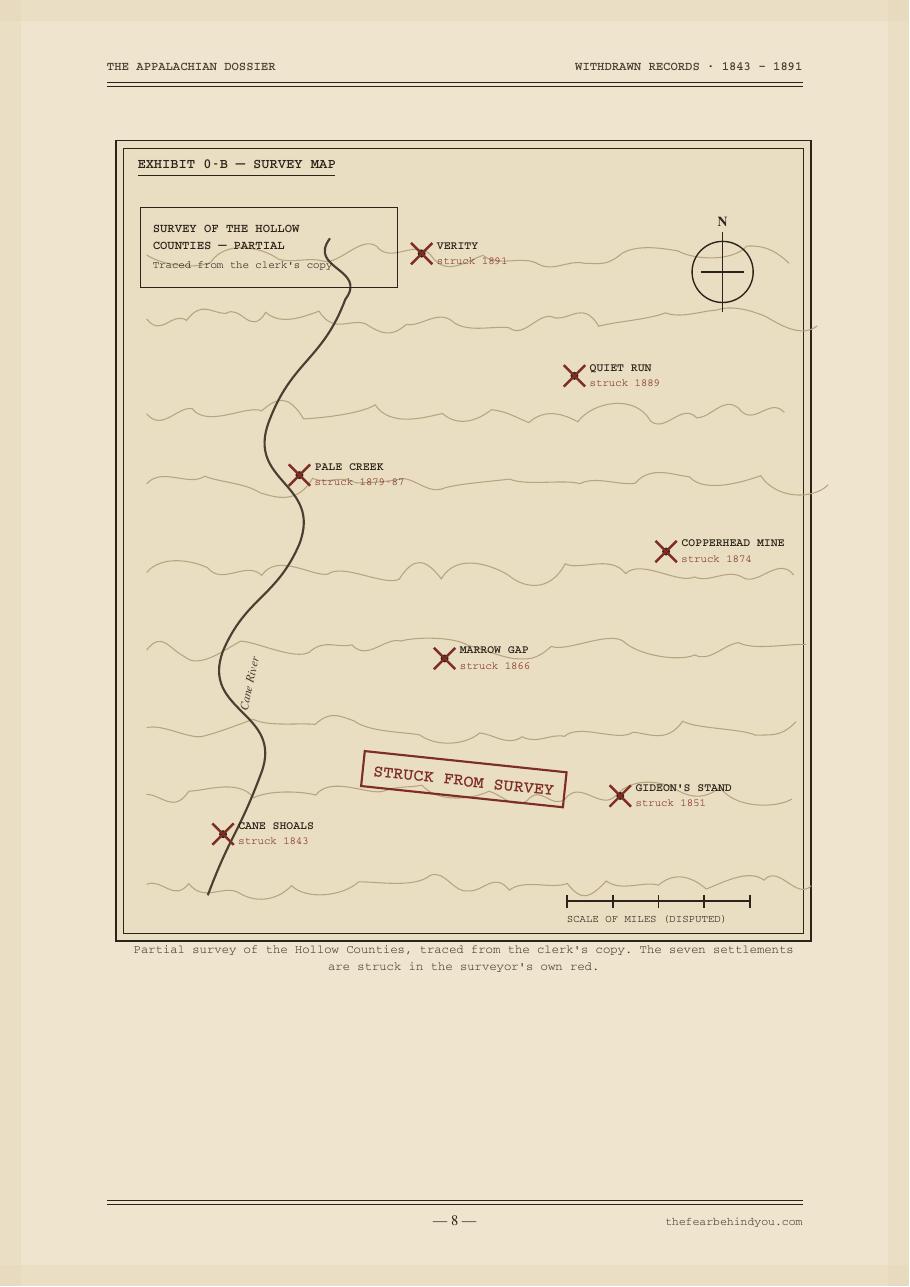
SEVEN CASES · SEVEN SETTLEMENTS · NONE ON ANY MAP PRINTED AFTER 1893
Each file contains the full narrative account and its supporting documents — depositions, diaries, schedules, and plates — exactly as the clerk copied them. Arranged in the order they were withdrawn.
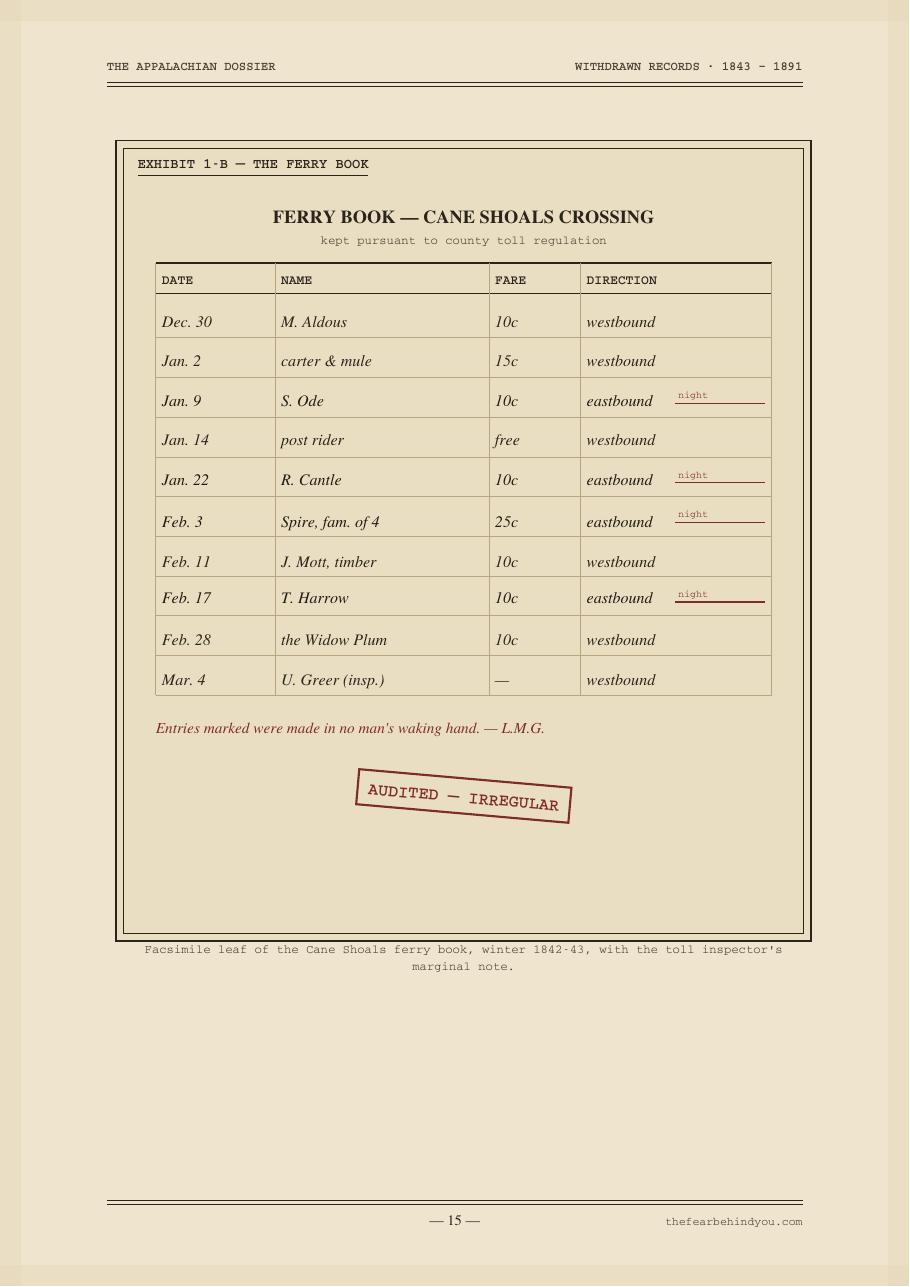
Thirty-one night crossings, recorded in a sleeping man's hand. Every fare paid. Every passenger eastbound. The far bank holds their footprints — none returning.
Forty communicants on the roll. Forty-seven voices in the hymn. The elders had stopped counting on purpose — and what the foundry found inside the bell ended the inquiry.
Eleven households answered the census in the same words, with the same laugh in the same place. The ninth household had been dead for seven years.
A sealed gallery learned the miners' knocking code. First it counted them. Then it called them by name. Then, one January night, the count came back wrong.
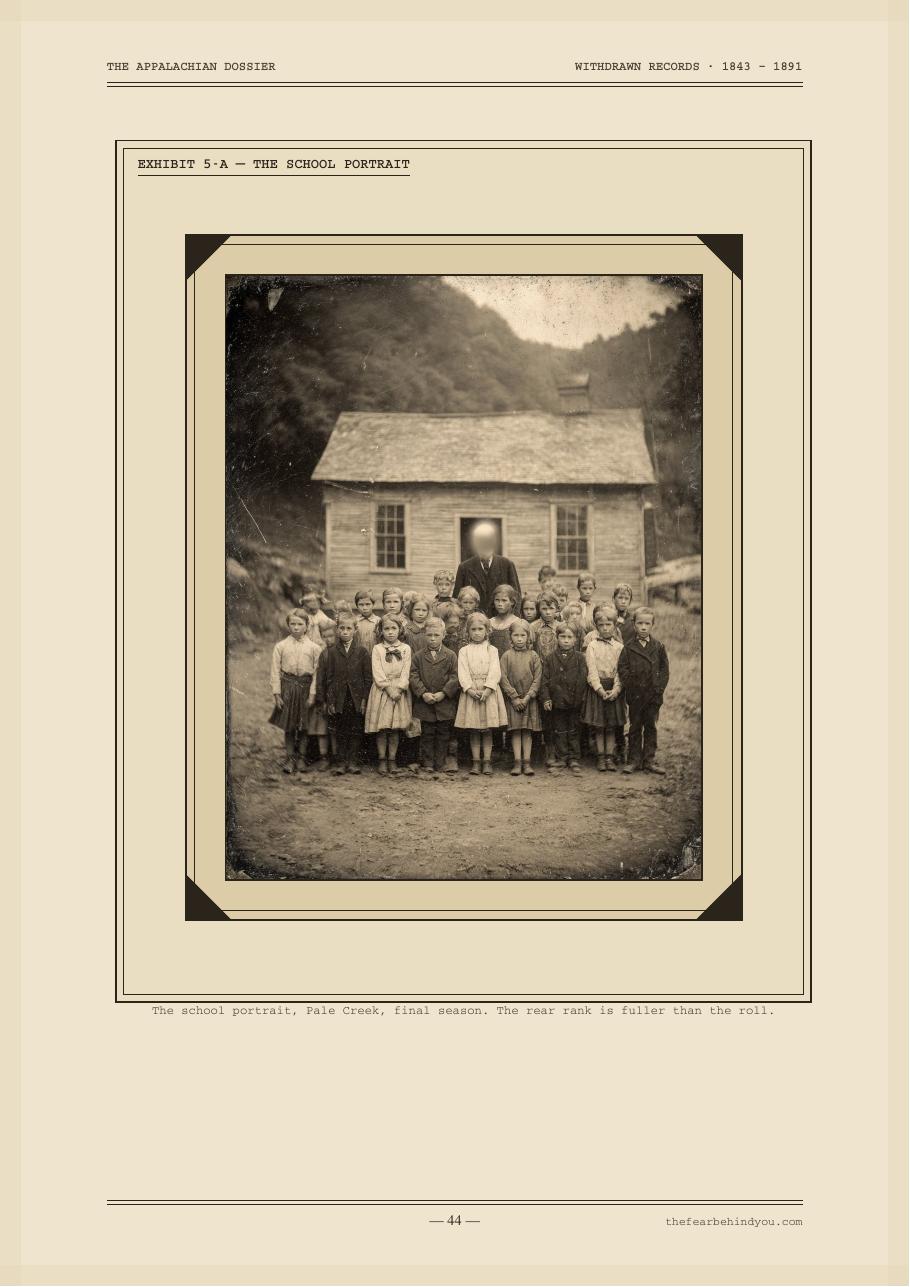
Nine summers of photographs in one valley. One figure in every plate, standing in the open. Each year, closer. The final recorded distance: nine feet.
A family carved its dead into the apple trees, one name to a tree. The fruit was excellent. The people who ate it began to remember lives that were not theirs.
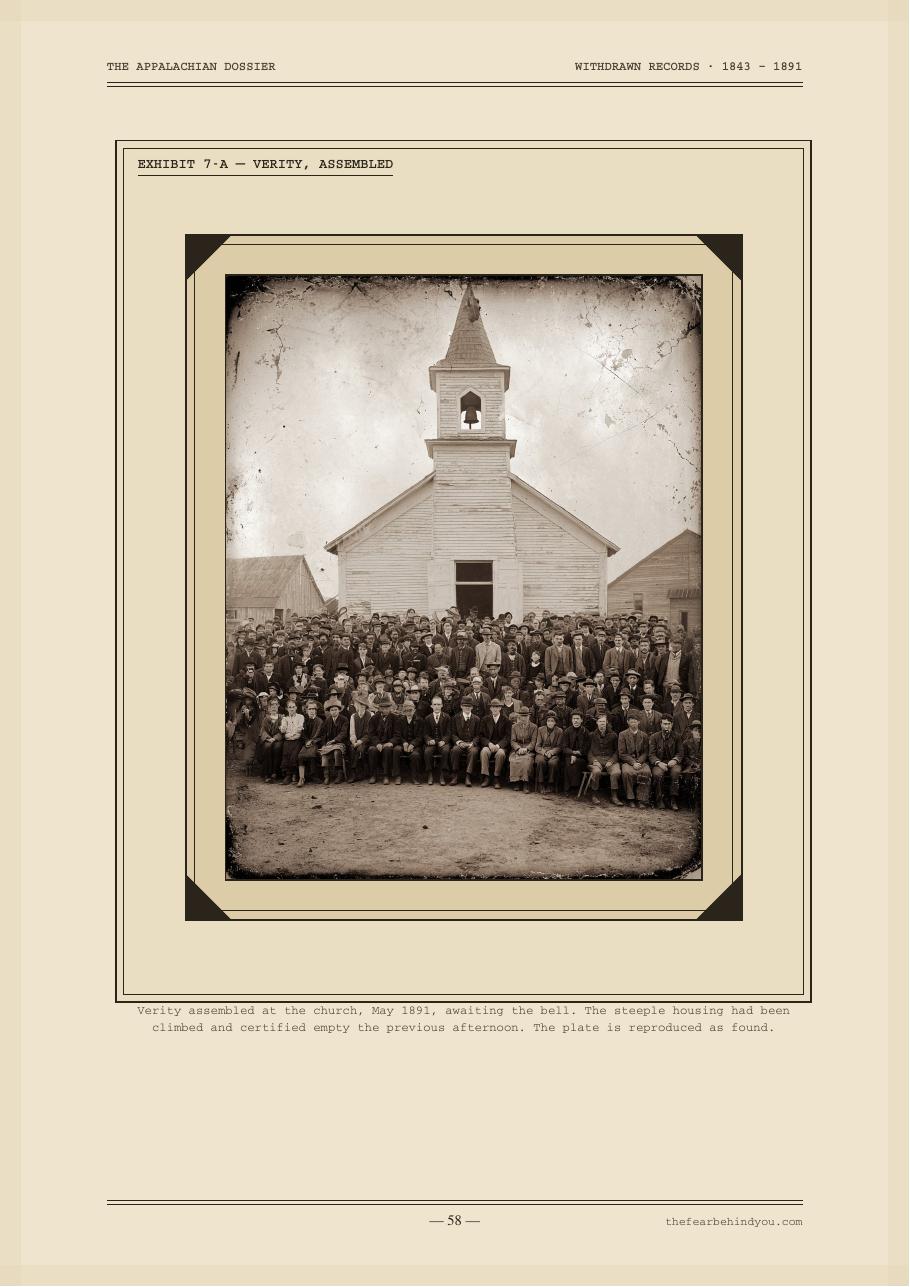
A town that surrendered its clocks, assembled in its Sunday clothes, and waited for a bell that had been sold for scrap six years before. It said the bell would ring soon.
Plus the clerk's epilogue — What the Clerk Withheld — and two appendices: the full chronology of the withdrawn files, and his five rules for reading them. The last rule is the one to follow.
Photographic plates, facsimile ledgers, foundry drawings, census schedules, mine plans, survey maps — sixteen plates and exhibits, reproduced as found.
It begins as a thing you could easily ignore.— H. V., FORMERLY OF THE CLERK'S OFFICE, 1892
Ignore it.
"I wish to say for the record that there is nothing at the place they end, and that I removed my hat there, and that I cannot tell this court why I did so."
"We are ninety men at this colliery. It counted ninety-one, and it rapped my brother's name."
"You will want to keep counting. Hold to it. It is the counting that keeps you on this side of the door."
ONE-TIME PAYMENT · INSTANT ACCESS · YOURS PERMANENTLY
The Appalachian Dossier is a work of archival horror fiction — seven original cases written and assembled as a recovered 19th-century records file, complete with the plates, ledgers, and depositions a real withdrawn archive would carry. The settlements won't appear on any map. That is rather the point.
Instantly. After checkout you'll receive a download link by email for the complete PDF. It opens on phone, tablet, computer, or e-reader, with a clickable index and bookmarked chapters.
69 pages — seven case files, sixteen plates and exhibits, an epilogue, and two appendices. Most readers finish it in one long, increasingly quiet evening.
There is almost no violence and no gore. The horror here is patient — it counts things, keeps appointments, and minds its manners. Readers tend to report the effect arriving later in the evening, in the quiet parts of the house. If you need blood to feel something, this may run too cold for you. If quiet is what gets you, fair warning.
The files are arranged in the order they were withdrawn, and the connections between them surface in that order — so read it front to back the first time. Appendix B contains the clerk's own five rules for reading withdrawn records, including the one rule he asks you not to skip. It's the last one.
These files were unfiled for a reason.
You are choosing to read them anyway.
INSTANT PDF DOWNLOAD · ONE-TIME PAYMENT